



Since we started adding Agentic capabilities our product has evolved in unexpected but delightful ways. The whole game seems to come down to what tools are enabled for agents. Its shocking how good LLMs are at using them.
What is a tool?
They are essentially custom functions with rules on how and when to use them to respond to a user question. A tool may have access to private internal data and applications. For example, say you are building a calorie tracker chatbot. You might have a proprietary database with all food items with nutrition (calorie) data. In your calorie tracker you can then enable the LLM with a tool to search this data. Rather than browse random websites with mediocre results, your richer dataset can provide Agents with superior results. Another tool might be to store and retrieve meal entries. A 3rd tool might track and display calories consumed over the past week. Agents can use these tools in context to devise a dinner recipe that ensures you hit your daily macros. And they are really good at using them!
Tools are not limited to just searching databases. They can render custom UI’s. Tools become part of the UX. Back in our calorie tracker a user inputs “12 ounces of rib eye with a cup of mashed potatoes.” Besides searching for ribeye and mashed potatoes, the agent can render meal cards inline with a “Log Item” button. These meal cards could enable all kinds of wonderful affordances. A history toggle that shows all the previous times it was logged. A price toggle to show price overtime. A percent of calories visualization that show how much of today’s calories will be consumed by this item.
As you can see a tool is not just backend calls for data, it can be an integral part of the user interface and user experience. This does lead to questions of who controls the user experience and how can you render custom UI (i.e. meal cards) in the LLM host (i.e. ChatGPT interface).
MCP Apps
This is a relatively new extension to the MCP protocol. Here 3rd party apps can enable custom UI to render tool results in the host app. Tool early to say, but the rendering of custom UI problem seems solvable. However, this means the host app whether its Claude.ai, Claude Cowork, or ChatGPT etc, controls the user experience. Your app is just one of dozens of apps. In an enterprise context, you may have multiple data tools registered to a host app. Would the host use the right tool?
I would imagine the LLM struggle in choosing between similar tools or even just pulling up an existing document with the requested data. Would it create a new query using Strata or open a document that mentions the same metrics? If it has to read through all the existing pdf, excel, or other artifacts to determine if the data exists, the overall UX will be suboptimal.
There is still quite a lot to figure out but the concept of tools are here to stay.
Preview of Agentic Tooling in Strata
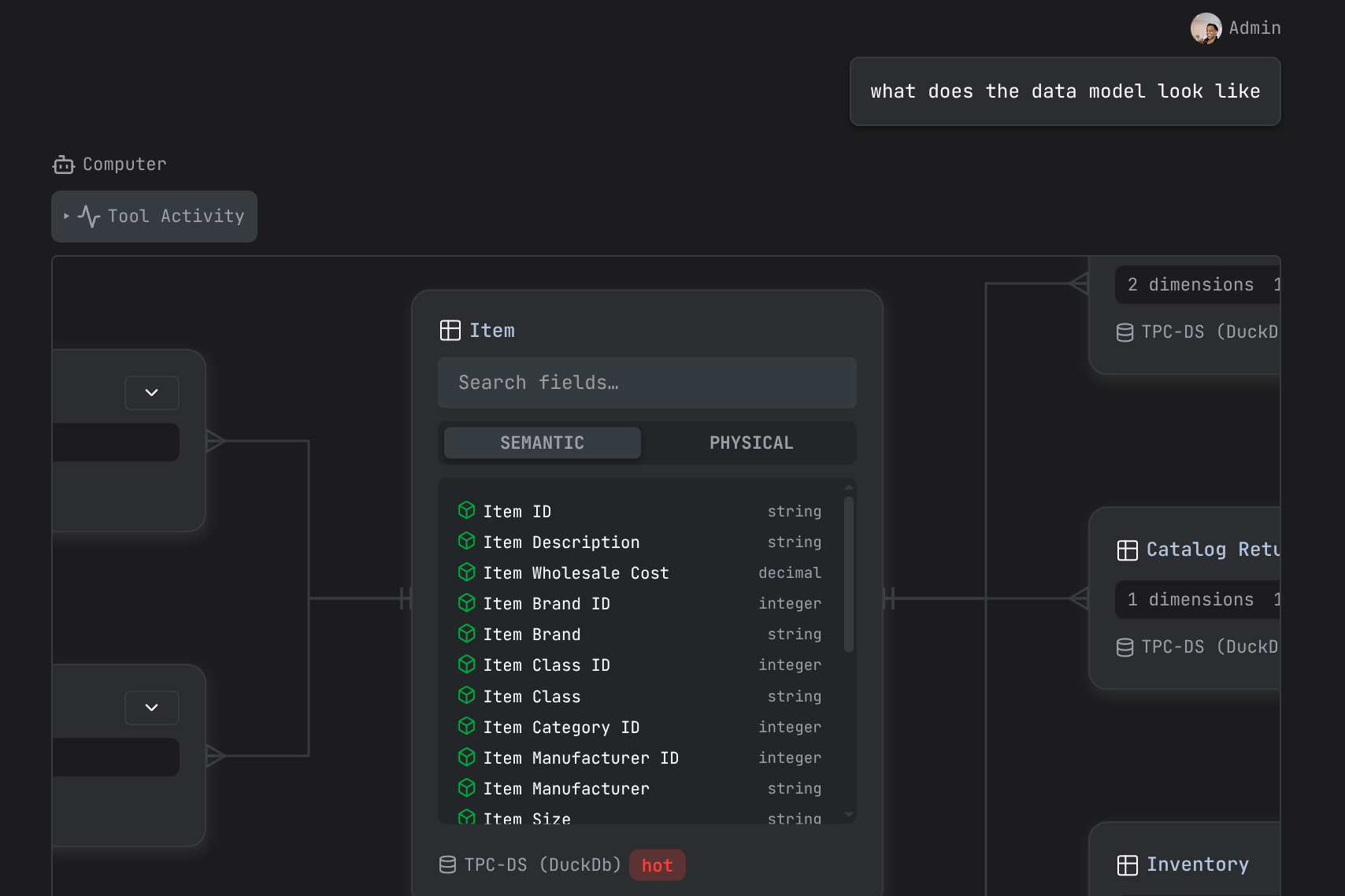
Semantic Model Explorer
Renders an in line model explorer. This is a draggable, zoomable interactive UI. Click to expand into larger view.
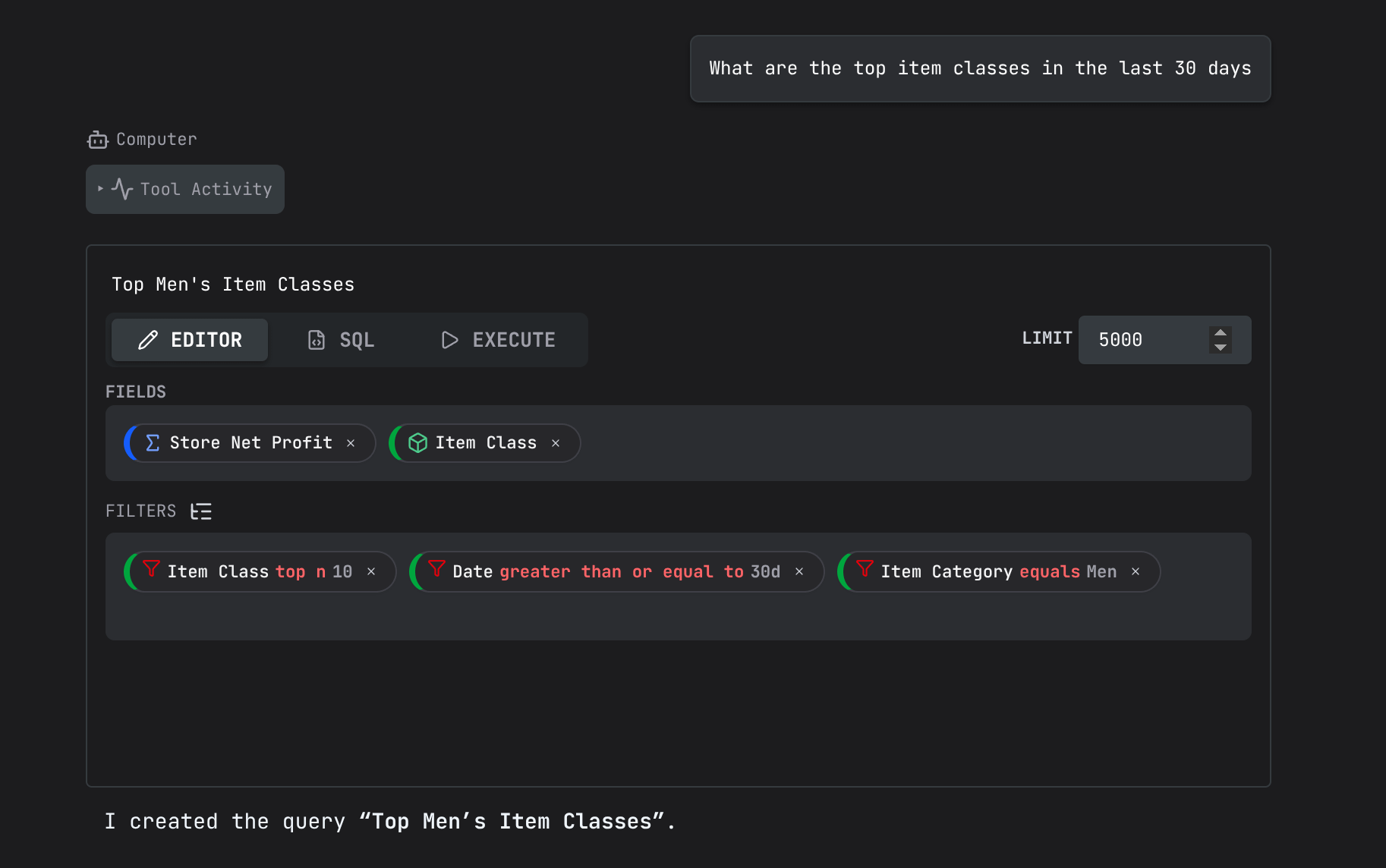
In Line Query Editor
As the user works with their agent to build queries the agent can render a query editor in line. This allows the user to correct or modify agent constructed queries. The amazing thing is that the agent can inspect the new query definition, execute it, and see the sql it generates. Agents can even sample results by paging through the data. This editor is also available in the tool activity window. This means our users are not trapped in an agents misunderstanding of the data or context. Agents and users can work together to get to the right answer.
Custom Visualization Rendering
Finally, any good BI tools will have great visualizations. Strata agents are no different. The type of visualizations created here are only limited by the users imagination and the available data.
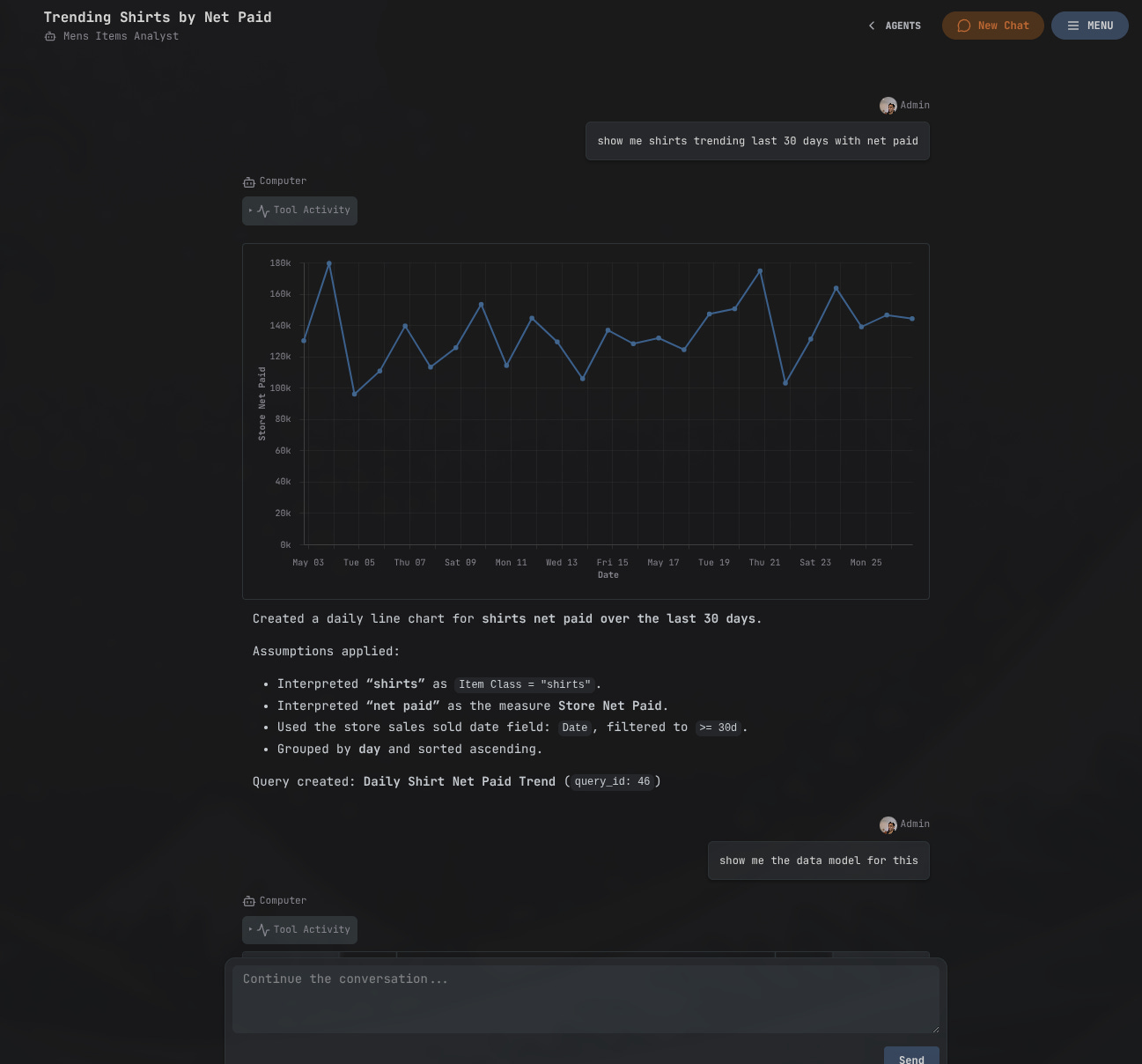
Whats coming next are tools to export from here directly to google sheets and other destinations, schedule email deliveries, agentic triaging of data, and more.
We are in for an innovation cycle like never been seen before. Will all software get subsumed into frontier lab interfaces as tools or will there be value in separate chat experiences?